

Short answer: yes. A jeweler can turn most AI jewelry images into a real piece, but rarely exactly as drawn. AI tools draw what looks good, not what metal and stone can physically do, so the design usually needs small changes before it can be made. A good maker keeps the look and changes only what is needed for strength and comfort.
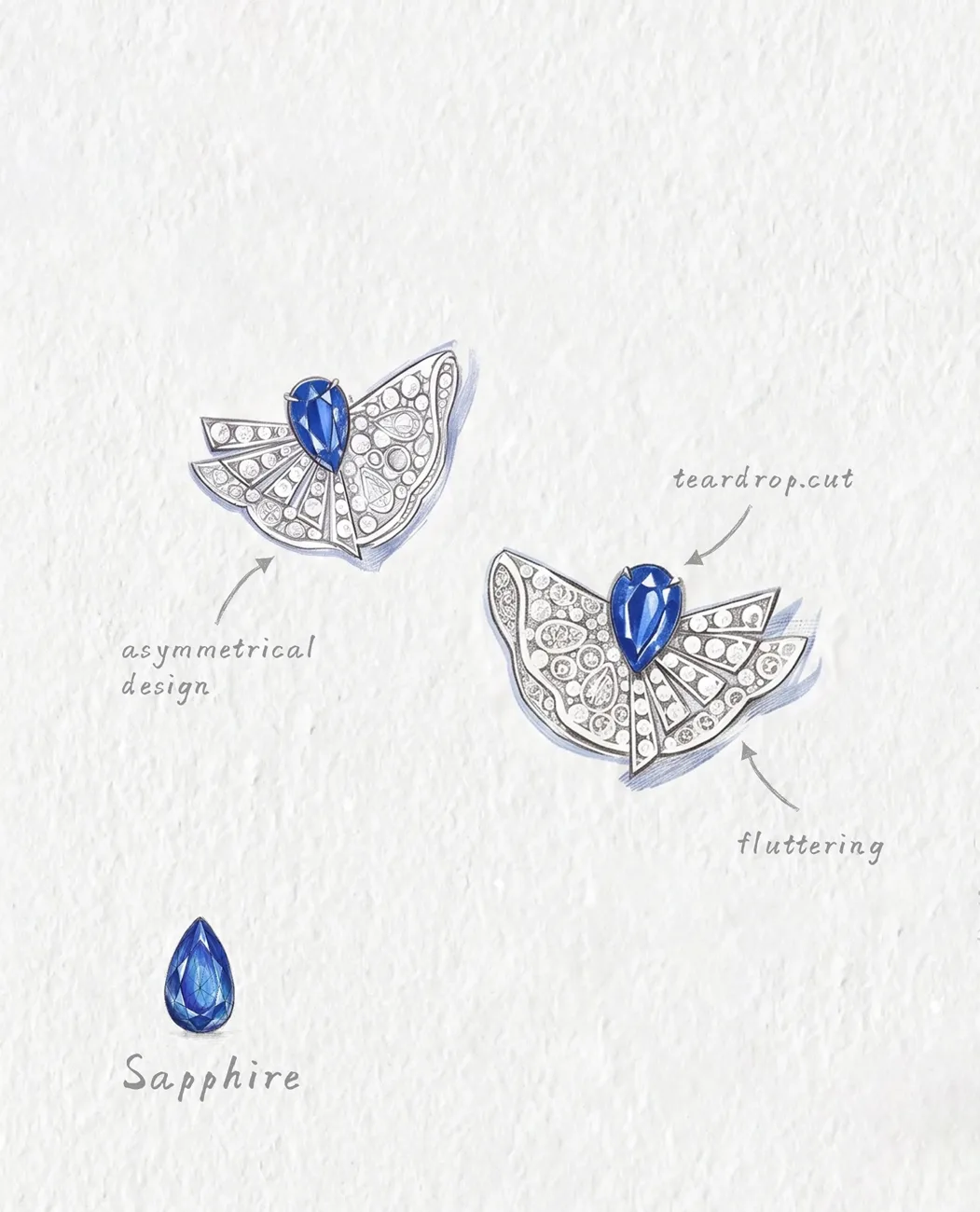
AI can imagine almost anything. Turning that imagination into jewelry you can actually wear is an entirely different challenge.
Artificial intelligence is changing the way people communicate jewelry ideas. A description or reference image can become a striking ring, pendant, or necklace concept in seconds. Ideas that once required professional drawing skills can now be expressed in a few words.
But there is a fundamental difference between creating an image of jewelry and creating jewelry that can actually be made. An AI-generated design may look extraordinary on a screen while suggesting disconnected components, fragile proportions, or stones that cannot be sourced as shown.
At OLICONN, we treat AI images as creative starting points. Bringing them into the physical world requires knowledge of materials, structure, gemstone cutting, and jewelry craftsmanship. This article explains why those skills matter—and why the right production method depends on the individual design.
1. Not Every AI Jewelry Design Can Be Manufactured as Drawn
A useful first review separates AI jewelry concepts into three broad groups. These are practical starting points, not a substitute for a detailed manufacturing assessment.
Category One: Visually Beautiful but Physically Impossible as Shown
Some images contain fundamental structural problems. Examples include:
- Gemstones that appear to float without a workable setting or support.
- Decorative metal elements disconnected from the main structure.
- Components too thin for the chosen metal, scale, and intended wear.
- Details too small to cast, finish, assemble, or maintain reliably.
- Connections or overlapping parts that do not form a coherent three-dimensional object.
A floating appearance is not automatically impossible: concealed supports and specialized settings can create that effect. The question is whether a real supporting structure can be designed at the required scale.
Where the structure truly cannot work, the image cannot be manufactured faithfully in its original form. Converting it into a 3D model does not remove the physical problem. The practical solution is to reinterpret the concept and develop a viable structure while preserving its artistic intention. If that requires a substantial visual change, it should be explained before production.
Category Two: Designs That Require Structural Modifications
Many concepts are close to being manufacturable. A gemstone may need a more secure seat, a delicate branch may need reinforcement, or a connection may need redesigning. Sometimes these corrections preserve most of the original appearance; sometimes the trade-offs are more visible.
Not every manufacturable design is best developed through the same CAD workflow. Computer-aided design is a powerful part of modern jewelry production. Digital sculpting and advanced modeling can also create highly organic forms, so irregular shapes should not be described as inherently beyond CAD.
Nevertheless, a skilled artisan may find hand-carved wax, direct metal shaping, engraving, or hand fabrication more practical for a particular sculptural surface or one-off piece. Other designs benefit from a combination of digital modeling and handwork.
Hand carving does not bypass material limits. Whether the model is digital or carved in wax, the finished design still needs enough strength, accessible settings, and a feasible route through production and finishing. The choice should follow the design, materials, budget, and maker’s skills.
Category Three: Designs That Appear Structurally Plausible
The third group contains images whose overall structures look realistic. These may be suitable for CAD development and production planning, but an image alone cannot establish that a design is ready to manufacture.
Dimensions, metal thickness, stone seats, tolerances, ring size, weight, comfort, polishing access, and the chosen manufacturing process still need review. A single view may conceal an unsupported setting or an impractical underside.
AI provides the visual concept. Jewelry professionals turn that concept into a dimensioned design and production plan.
What usually has to change in an AI design
The images look convincing, but they were never checked against how jewelry is built. These are the problems we see most often:
- Stones with nothing holding them. AI often draws gems floating, or with prongs that do not reach the stone.
- Metal that is too thin. Delicate lines may look fine in a picture and bend or break on the hand.
- Details too fine to survive. Some textures are too small to keep their shape through making and polishing.
- Comfort problems. Sharp edges, tall settings and shapes that catch on clothing rarely show up in an image.
2. The Overlooked Challenge: Gemstones
Metal structure is only part of the story. AI can depict gemstones in almost unlimited colors, outlines, and proportions: a leaf-shaped stone, an asymmetrical opal, or a flower-like carving. The exact stone shown may not exist in available inventory—or may combine optical features that one real material cannot reproduce.
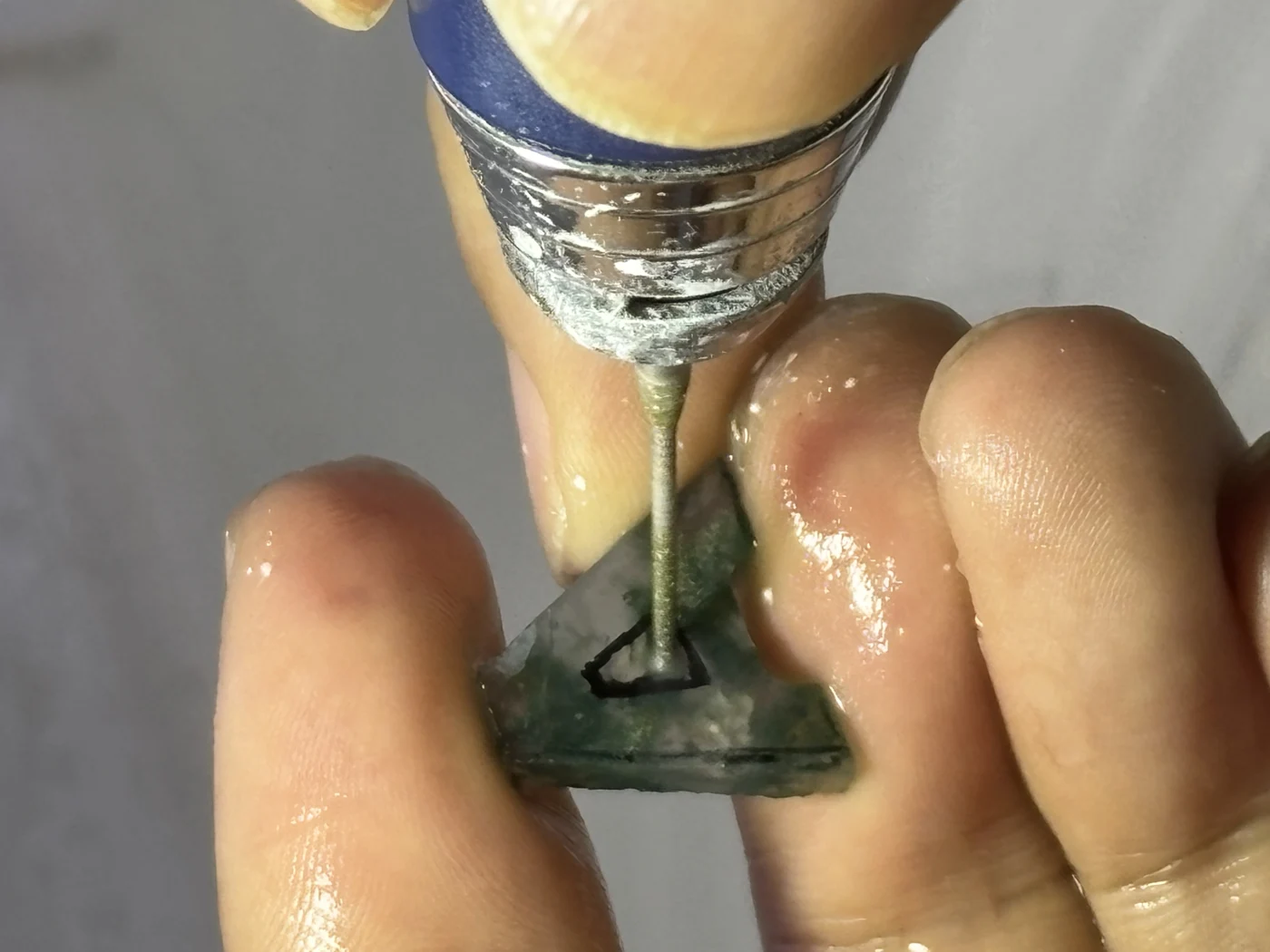
Many suppliers carry familiar cuts and calibrated sizes, although custom and unusual cuts are also available. The first step is to determine whether a suitable existing stone can be sourced. When it cannot, an experienced gemstone cutter or gem carver may need to join the project.
Depending on the design, a lapidary artisan may:
- Select suitable rough or an existing stone for recutting.
- Develop a custom outline and workable proportions.
- Carve curves, relief, or sculptural details where the material allows.
- Balance appearance with yield, cost, inclusions, and breakage risk.
- Coordinate with the designer and setter so the finished stone can be mounted securely.
Custom cutting cannot guarantee a pixel-for-pixel match to an AI image. The available rough, color distribution, internal features, cleavage, and optical behavior all influence the result. Natural and laboratory-grown stones must also be identified accurately; one is not a substitute for the other without the customer’s agreement.
Hardness describes resistance to scratching. Toughness concerns resistance to breaking and chipping, while stability concerns responses to heat, light, and chemicals. These are different properties, as explained in GIA’s guide to gem durability. A thin point or deep carved opening may be vulnerable even in a hard gemstone.
For complex commissions, stone selection and cutting should be coordinated with the setting design early. Final setting dimensions should reflect the actual finished stone.
3. Why CAD Alone Is Not Enough
The process is sometimes presented as a simple sequence: AI image → 3D model → 3D printing → finished jewelry. That leaves out much of the work.
In a common casting workflow, the model is printed in a suitable castable material, then invested and burned out to create a mold cavity. Metal is cast into that cavity, and the casting is cleaned and finished. Depending on the piece, assembly, soldering or laser welding, engraving, stone setting, and polishing follow. Other pieces may be fabricated directly from metal, and some specialist processes print metal directly.
A printable model is therefore not automatically a castable, wearable piece. Casting allowances, supports, access for tools, assembly order, and finishing can all affect the outcome. There is no single minimum thickness or detail size that works for every alloy, production process, and jewelry type.
CAD remains valuable for precision, iteration, and communication. Hand-carved wax can offer a tactile route to sculptural form. A metal artisan can shape and engrave details; a lapidary can prepare a suitable stone; a setter can integrate it into the mount. These roles may overlap in a small workshop.
The challenge is finding the right combination of skills and processes to make the design physically possible. Neither automation nor handwork alone guarantees a successful result.
4. How an AI image becomes a real piece
- Send what you have. One image is enough. More angles, a size and the stone you want make the quote more accurate.
- Get a review and quote. The maker checks what can be made as drawn and prices it by metal weight and work involved. We reply within 24 hours.
- Confirm the quote and design direction. Once you pay a deposit, work begins, and you should see drawings from several angles or a rendering as it progresses, with every change explained.
- Production. The piece is shaped, cast, set and polished. Ours usually takes 2–4 weeks after deposit and quote confirmation; shipping transit is additional.
- Check the finished piece. We send photos of the finished piece before it ships.
5. How to make an AI design easier to produce
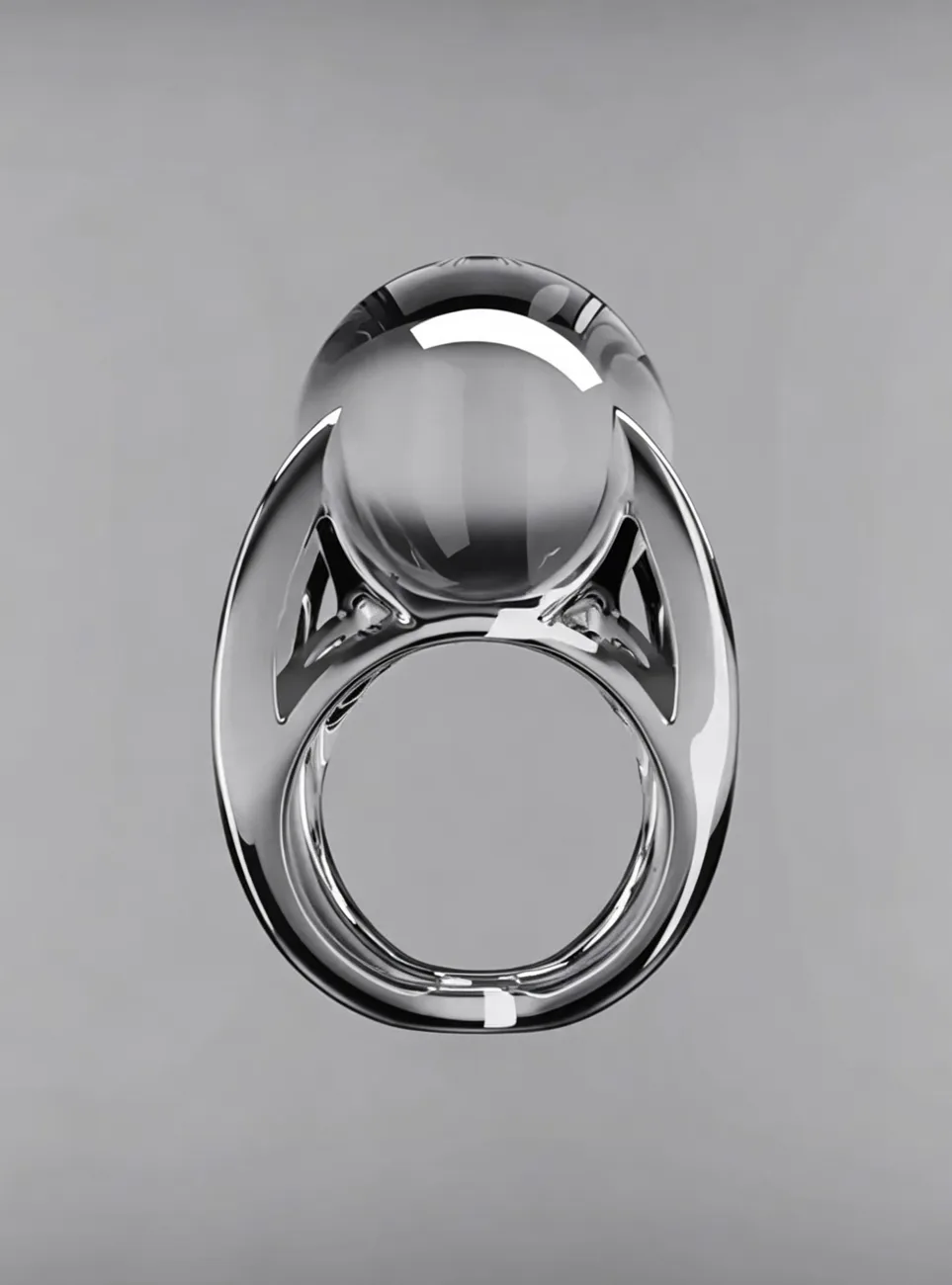
- Ask your AI tool for front, side and back views of the same piece.
- Include a material and a real stone, such as “18K gold ring with a 7 mm oval moss agate”.
- Keep the most important details large and clear. Tell the jeweler which ones you care about most.
- Give your ring size, or the pendant height in millimeters.
6. The OLICONN Approach: From AI Imagination to Real Craftsmanship
Our process begins with understanding the customer’s vision: which silhouette, texture, color, or personal detail matters most? We then review the concept from artistic and manufacturing perspectives.
If the design appears viable, the next step is to develop the dimensions and production approach. If it contains correctable problems, we explain the proposed changes. Digital modeling, wax carving, metalworking, and gemstone work are considered according to the project rather than promised as a fixed sequence for every order.
The objective is to preserve the artistic intention and translate it into a wearable piece, with realistic expectations about materials, structure, and finish. Necessary modifications should be understood and approved before production begins.
A Real Example: An AI Concept and Hand-Engraved Gold
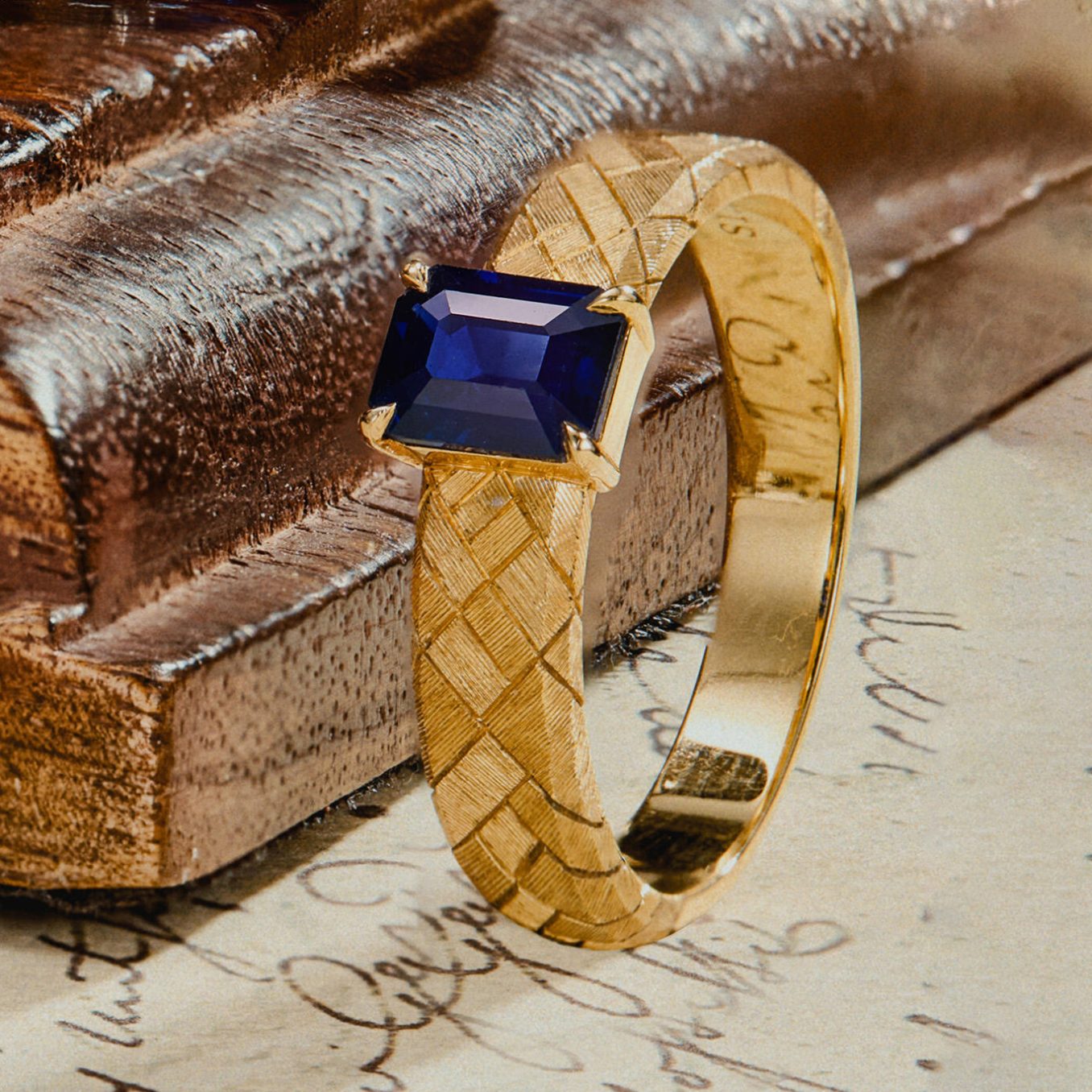
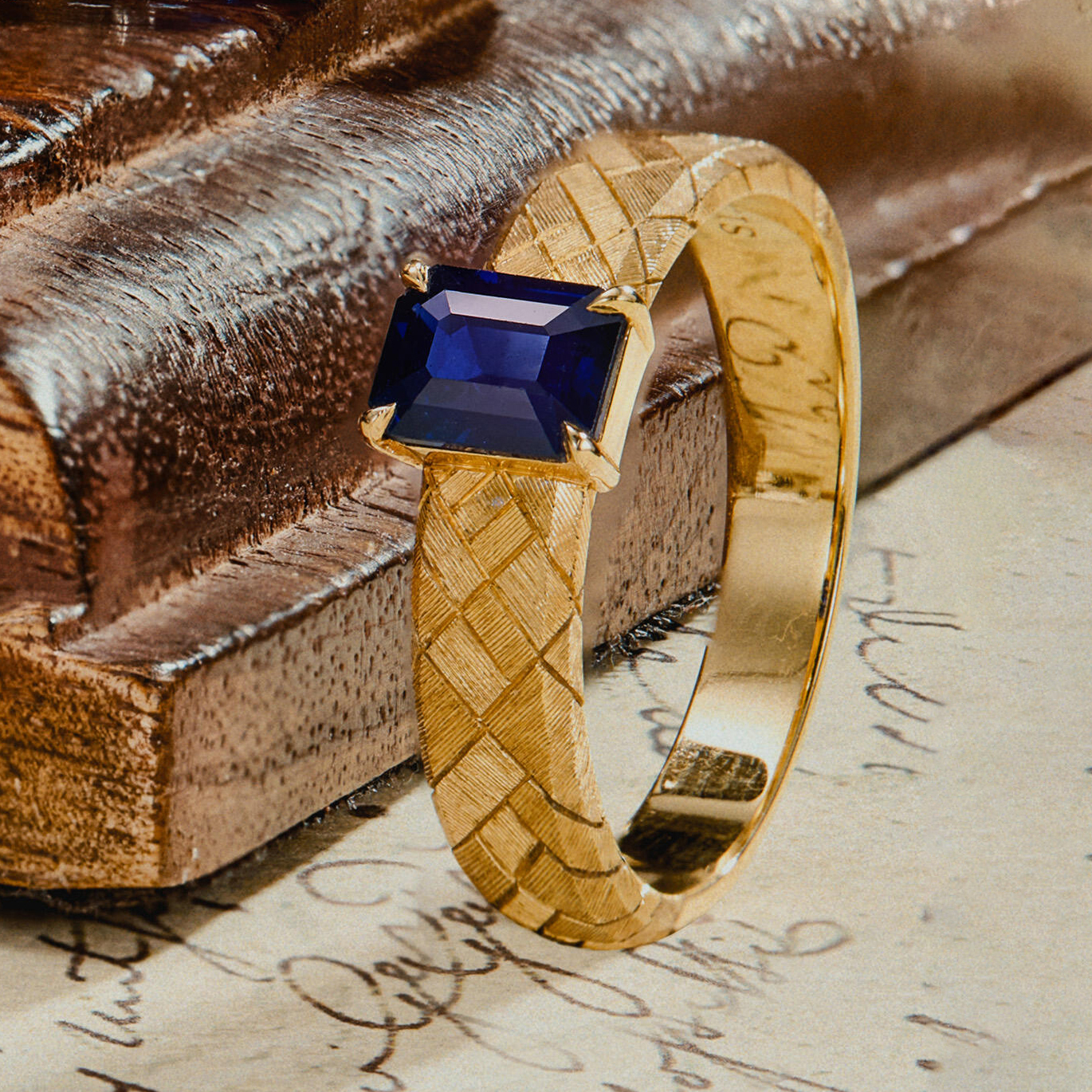
In OLICONN’s Italian-inspired hand-engraved ring commission, a customer-supplied AI concept became an 18K gold ring with a natural blue sapphire. The basketweave surface was engraved directly into the metal by hand.
The pattern gives a solid band the visual character of woven material; it is not an open weave of gold wires. This is one documented example of an AI concept translated through human craftsmanship.
7. Questions to ask before you pay a jeweler
- Will I see design previews, and how long do I have to request changes?
- What exactly will you change from my image, and why?
- How is the price worked out, and what is the deposit?
- Who owns my design, and will you share it publicly?
- What happens if I change my mind?
8. The Future of AI Jewelry Is a Collaboration Between Imagination and Craftsmanship
AI makes it easier to communicate an idea without knowing how to draw. A customer can start with a description, a sketch, a photograph, or an AI image. But that freedom does not remove the physical realities of metal and gemstones.
As concepts become more unconventional, the ability to interpret forms, revise connections, select stones, and coordinate digital and traditional methods remains valuable. The future of personalized jewelry brings creative tools together with practical expertise.
AI expands what people can imagine. Human craftsmanship determines how those ideas can become real.
Your Imagination. Our Craftsmanship.
Frequently asked questions
Can a jeweler make jewelry from a Midjourney or ChatGPT image?
Yes, in most cases. The image works as a design reference. A jeweler then adjusts it so that stones are held securely and the metal is strong enough to wear.
Do I need a finished design?
No. An AI image, a sketch, a photo or a written idea are all workable starting points.
How much does it cost to make an AI jewelry design?
It depends on the metal and the work involved. OLICONN custom projects start at US$80, and we quote each design individually within 24 hours.
Can I use my own gemstone?
Often, yes. OLICONN can design a setting around a stone you already have.
Have an AI Jewelry Design in Mind?
Visit OLICONN Custom Design to share your image or idea. Include your preferred metal, gemstone, approximate size, and the details you most want to preserve. We will discuss feasibility and any changes before you approve a design for production.
By Ethan · OLICONN
About OLICONN: OLICONN is a custom jewelry brand that works with customer ideas, sketches, photographs, and AI-generated concepts. Its published project stories show examples of hand engraving and gemstone carving. Materials, methods, feasibility, and final specifications are confirmed individually for each commission.